
Search Oregon Police Blotter
Oregon police blotter records give the public a window into law enforcement activity across the state. These logs track calls for service, arrests, and incident reports filed by police departments and Sheriff offices in all 36 Oregon counties. You can search police blotter data online, request copies from local agencies, or visit a records office in person. Oregon law supports broad access to these records, and most agencies post blotter updates on a regular basis for public review.
Oregon Police Blotter Quick Facts
Oregon Police Blotter Access Laws
Oregon has strong public records laws. They protect your right to view police blotter data and other law enforcement records. Under ORS 192.314(1), every person has the right to inspect any public record held by a public body in the state. This means police blotter logs, incident reports, and arrest records kept by Oregon agencies are open for review. You do not need to give a reason for your request. The law puts the burden on the agency to justify any denial.
When you submit a records request in Oregon, the agency must respond within five business days. They have up to ten more business days to complete your request. The total timeline cannot exceed 15 business days under ORS 192.324. Agencies can charge fees for the actual cost of making copies. If your request will cost more than $25, the agency must give you a fee estimate first. Fee waivers are available when the request serves the public interest. Most police blotter records in Oregon can be obtained at low or no cost.
Not all records are fully open. Oregon law includes exemptions that may limit access to certain police blotter details. ORS 192.345(3) allows agencies to withhold investigatory information compiled for criminal law enforcement purposes. This exemption applies when release would interfere with an active case or harm an ongoing investigation in Oregon. Personal privacy protections under ORS 192.355(2) may also lead to redactions in police blotter records, such as victim names or witness details.
Note: Oregon agencies must cite a specific exemption when they deny any part of a police blotter records request.
Oregon Incident Report Details
Police blotter entries in Oregon vary by agency. However, most follow a standard format. Each entry in an Oregon police blotter log typically documents a single call for service or law enforcement action. The level of detail depends on the type of incident and the agency that created the report. Minor calls may only have a few lines. Serious crimes generate longer, more detailed incident reports with multiple pages of narrative.
Oregon incident reports generally contain the officer's name and badge number, the case or incident number, and the date and time of the event. The report lists the location where the incident took place. A narrative section describes what happened in the officer's own words. Witness information, subject and victim details, evidence collected, and follow-up actions round out the report. The disposition field shows whether an arrest was made, a citation was issued, or the case was closed in Oregon.
The Oregon DOJ Public Records Manual provides guidance on what law enforcement agencies must release to the public.
This resource from the Oregon Department of Justice outlines the rules that govern police blotter records disclosure. It covers the balance between public access and privacy protections that apply to incident reports across Oregon law enforcement agencies.
Oregon Booking Records and Arrest Logs
Booking records are created when someone is taken into custody in Oregon. They differ from police blotter entries. A blotter entry logs the initial call or incident. A booking record documents what happens at the jail. Oregon booking records include personal identification details, the charges filed, bail amounts, booking dates and times, court dates, custody status, and housing location within the facility. Release dates are added when the person leaves custody.
Mugshot access in Oregon follows specific rules. Under ORS 133.870, mugshot photographs are not released until after a conviction. This protects people who are arrested but later cleared of charges. Once a conviction occurs, the mugshot becomes part of the public record. Many Oregon county jails post booking logs on their websites with basic arrest details but withhold photos until the case reaches a conviction.
Oregon arrest logs are a subset of police blotter data. They list everyone taken into custody during a given time period. Most Oregon police departments and Sheriff offices publish daily or weekly arrest logs. These logs show the person's name, age, charges, and the date of arrest. They do not include the full narrative found in an Oregon incident report. To get the complete police blotter record for an arrest, you need to request the incident report from the Oregon agency that made the arrest.
Note: Booking records in Oregon may be redacted to remove Social Security numbers and other sensitive personal data.
How to Search Oregon Police Blotter Records
Several methods exist to search police blotter records in Oregon. The best approach depends on what you need and how quickly you need it. Online searches offer speed. In-person visits at Oregon agencies allow more thorough review. Written requests create a formal paper trail. Each method has its place when searching Oregon records.
The Oregon eCourt system (OECI) provides online access to court case information across all 36 Oregon counties. You can search by case number, party name, citation number, attorney name, or date range. Basic case information is free with registration. For full document access, the OJCIN OnLine subscription costs $15 per month. This system covers criminal cases that originated from police blotter arrests and incident reports throughout Oregon.
For criminal history checks, the Oregon State Police CJIS division handles personal record requests. You need to fill out a "Copy of Own Record Request" form. A fingerprint card is required with your name, date of birth, place of birth, gender, race, and signature. Fingerprinting at the OSP office costs $20 and is available on weekdays from 8:00 AM to 4:30 PM. The request form itself costs $33. Processing takes up to ten business days. Call 503-378-3070 for questions about Oregon criminal history records.
Oregon Police Blotter and Body Camera Footage
Body-worn camera video falls under special rules in Oregon. Under ORS 192.345(40), this footage is only released when the requester can demonstrate a clear public benefit. Even then, faces in the video must be blurred. The cost of blurring falls on the person making the request. This makes body camera footage one of the hardest types of police blotter evidence to obtain in Oregon.
Personnel disciplinary records also carry restrictions under Oregon law. ORS 192.345(12) exempts certain personnel actions from public disclosure in Oregon. This can limit what you learn about officer conduct tied to a police blotter incident. However, final disciplinary outcomes and sustained complaints are often available through separate Oregon records requests.
Oregon Records Dispute Resolution
Disagreements happen. Sometimes an Oregon agency denies a police blotter request or charges fees you think are too high. The state created the Public Records Advocate in 2017 through Senate Bill 106 to help resolve these disputes. Either the requester or the agency can ask the Advocate to step in. The dispute resolution process must be completed within 21 days.
The Oregon Public Records Advocate serves as a neutral party. They review the request, the Oregon agency's response, and the applicable exemptions. Their goal is to reach a fair outcome without going to court. This office has helped many Oregon residents obtain police blotter records and other public documents that were initially denied. The service is free and available to anyone in Oregon.
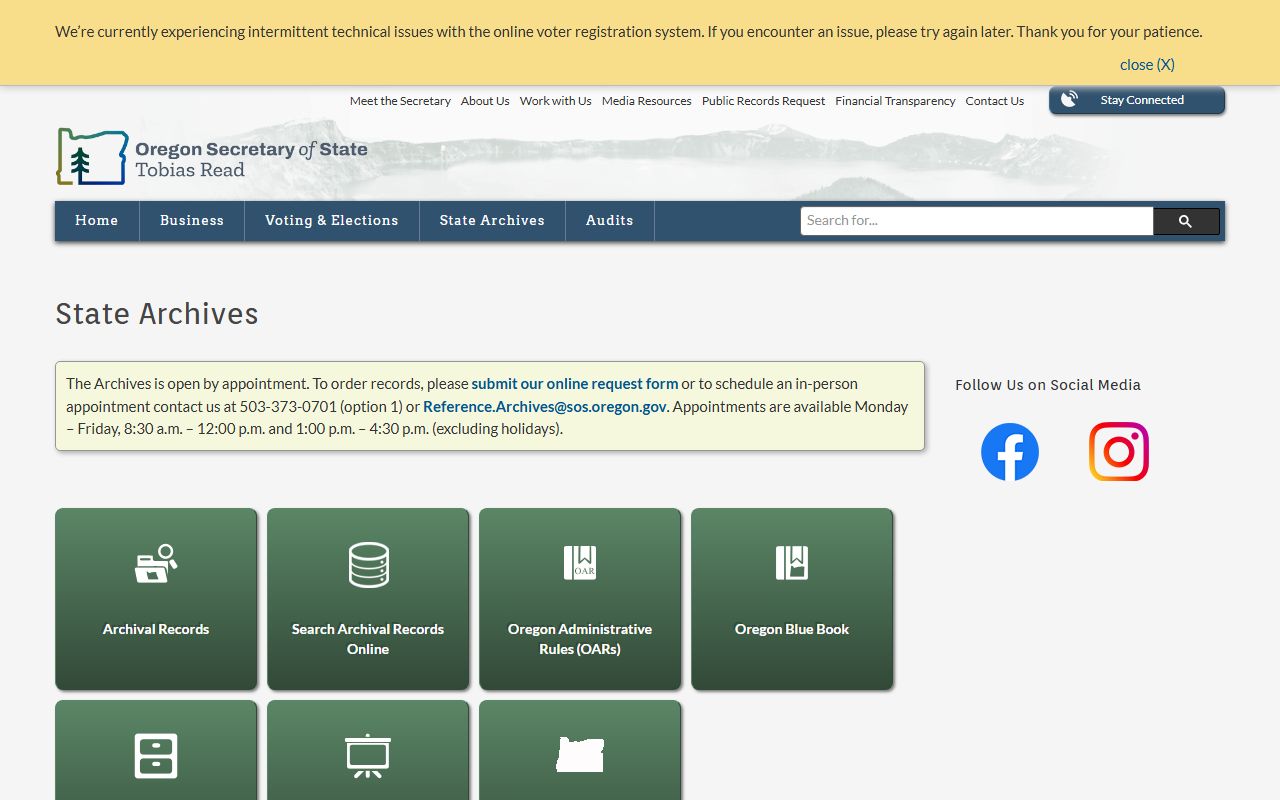
The Oregon Secretary of State Archives is another resource for historical records. Older police blotter logs and law enforcement records may have been transferred to the state archives. This is a good starting point when you need records that go back decades in Oregon.
Note: The Public Records Advocate cannot force an agency to release police blotter records, but their recommendations carry significant weight in Oregon.
Oregon Arrest Record Expungement
Oregon allows certain records to be expunged. This means they are sealed from public view. Once an arrest record or police blotter entry is expunged, it will not appear in standard searches. The rules are set by ORS 137.225. Eligibility depends on the type of charge and how much time has passed since the case ended.
Wait times for expungement in Oregon vary by offense. Non-conviction arrests can be expunged 60 days after the case is dismissed. Class B felonies require a seven-year wait. Class C felonies have a five-year waiting period. Misdemeanors can be expunged after three years in Oregon. Not all crimes are eligible. Some serious offenses stay on the Oregon record permanently. If a record has been expunged, it will not show up in police blotter searches or criminal history checks in Oregon.
Oregon Police Blotter Request Fees
Oregon agencies can charge fees for police blotter requests. The fees must reflect the actual cost of searching for and copying the records. Under ORS 192.324(4), agencies may charge reasonable fees for staff time, copies, and mailing. Most police blotter requests cost very little. Simple requests for recent blotter logs are often free. Larger requests that require significant staff time cost more.
If the estimated cost exceeds $25, the Oregon agency must provide a written fee estimate before starting the work. You can narrow your request to reduce the cost. Fee waivers are available when the request serves the public interest in Oregon. Media organizations and researchers in Oregon often qualify for waivers. Individual Oregon residents can also request waivers if they can show the information benefits the broader community.
- Personal criminal history request: $33 plus $20 for fingerprinting
- OJCIN OnLine subscription for court records: $15 per month
- Basic OECI court case search: free with registration
- Copy fees: vary by agency, based on actual costs
- Fee waivers: available for public interest requests
Tips for Finding Oregon Incident Reports
Start with the agency that handled the call. Each Oregon police department and Sheriff office maintains its own police blotter. City police handle calls within city limits. County Sheriff offices cover unincorporated areas. Oregon State Police handle highway incidents and assist rural areas. Knowing which agency responded is the fastest way to find the right police blotter record.
Be specific in your request. Include dates, locations, and names if you have them. A vague request will take longer to process in Oregon. Oregon agencies respond faster when you give them enough detail to locate the record quickly. Ask for the incident report by case number if you know it. This is the fastest way to get a police blotter record from any Oregon agency.
Check online first. Many Oregon police departments publish police blotter summaries on their websites or social media pages. Some Oregon agencies use third-party platforms to share daily activity logs. These summaries may be enough for your needs. If you need the full Oregon incident report, the online summary will give you the case number to reference in your formal request to the Oregon agency.
Oregon courts are another valuable search tool. Arrests logged in police blotter records often lead to criminal cases. The Oregon eCourt system lets you search criminal case filings connected to police blotter arrests. This can reveal charges, court dates, and case outcomes tied to an arrest record in Oregon.
Browse Oregon Police Blotter by County
Each of the 36 counties in Oregon has its own law enforcement agencies that maintain police blotter records. Select a county below to find local resources for incident reports, arrest logs, and booking records in that area.
Police Blotter in Major Oregon Cities
City police departments in Oregon maintain their own police blotter logs. Pick a city below to find local arrest records, incident reports, and booking information from that area.